
Bathroom Tile Mold Stains Guide Part 2
Introduction
Bathroom tile mold stains are a common yet frustrating issue for homeowners. Left unchecked, these stains can lead to unsightly discoloration and potential damage to your tiles and grout. This guide will help you understand what causes these stains, how to effectively remove them, and most importantly, how to prevent them from coming back.
What Causes Stains?
Mold stains on bathroom tiles are primarily caused by moisture. Bathrooms are naturally humid environments, which create the perfect breeding ground for mold and mildew. Here are the main contributors:
- High Humidity: Showers and baths introduce excess moisture into the air.
- Inadequate Ventilation: Poor airflow allows moisture to linger.
- Water Leaks: Dripping faucets or leaky pipes can create damp spots.
- Neglected Cleaning: Regular cleaning can help prevent mold growth.
- Rubber gloves
- A mask (to avoid inhalation of spores)
- A scrub brush or toothbrush
- Cleaning solution (store-bought or homemade)
- Spray bottle
- Microfiber cloths
- Remove any items from the bathroom that may get in the way.
- Ensure good ventilation by opening windows or turning on an exhaust fan.
- Homemade Solution: Mix one part vinegar with one part water in a spray bottle. Alternatively, a baking soda paste (mix baking soda with water) can be effective.
- Spray or apply the solution directly onto the stained areas.
- Let it sit for 10–15 minutes to penetrate the mold.
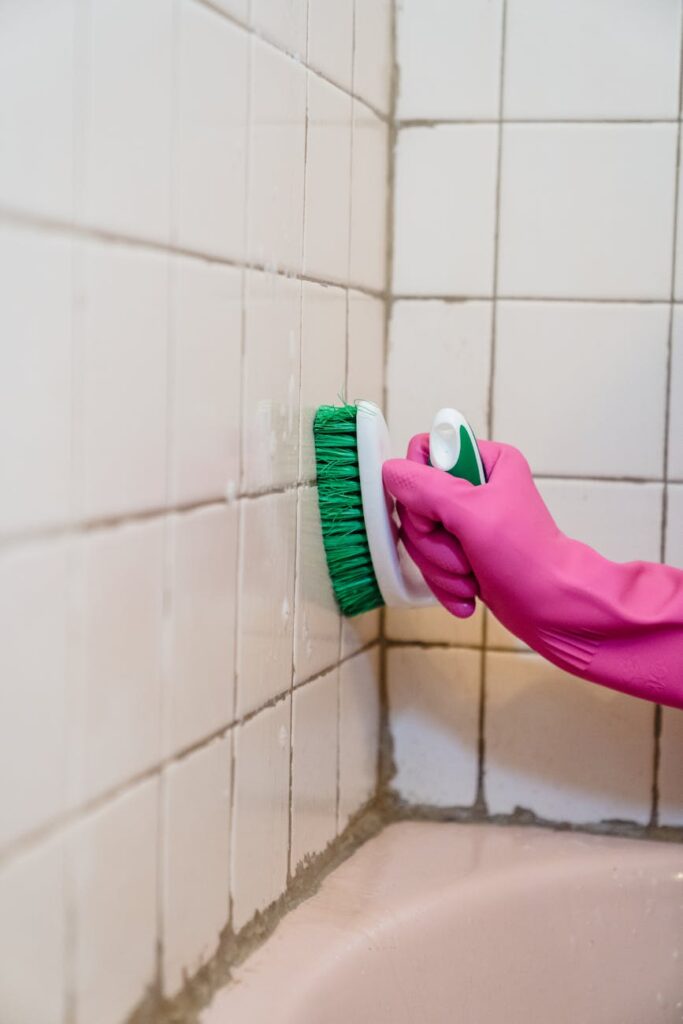
- Use the scrub brush or toothbrush to scrub the affected areas gently.
- Apply more cleaning solution as needed to keep the area damp.
- Rinse the scrubbed areas with warm water to remove any residue.
- Wipe down the tiles with a microfiber cloth to absorb excess moisture.
- Use a clean towel or cloth to dry the tiles and grout thoroughly.
- Ensure the bathroom is well-ventilated until everything is completely dry.
Why This Problem Happens
Understanding why mold stains occur is key to addressing the issue effectively. Here’s a breakdown:
1. Moisture Retention: Bathrooms lack sunlight, which can help dry surfaces. This allows moisture to seep into grout lines and tile surfaces.
2. Organic Matter: Soap scum, hair, and skin cells provide nutrients for mold spores, promoting their growth.
3. Temperature Variations: Warm, humid air from hot showers can condense on cooler surfaces, leading to moisture accumulation.
4. Old Grout: Deteriorated grout can trap moisture and become a mold haven.
How to Fix Stains (Step-by-Step)
Removing mold stains from bathroom tiles requires a systematic approach. Follow these steps:
Step 1: Gather Your Supplies
You will need:
Step 2: Prepare the Area
Step 3: Apply the Cleaning Solution
Step 4: Scrub the Stained Areas
Step 5: Rinse Thoroughly
Step 6: Dry the Area
Best Cleaning Methods
Different cleaning methods can be effective against mold stains:
1. Vinegar: A natural disinfectant that can kill mold spores.
2. Baking Soda: A gentle abrasive that helps scrub away stains while deodorizing.
3. Hydrogen Peroxide: A stronger option for tough stains; apply it directly to the mold and allow it to sit for 10 minutes.
4. Commercial Cleaners: Look for products specifically designed for mold and mildew removal. Always follow the manufacturer’s instructions.
Common Mistakes to Avoid
When tackling bathroom mold stains, avoid these pitfalls:
1. Skipping Safety Gear: Always wear gloves and a mask to protect yourself from spores and chemicals.
2. Using Bleach: While bleach may seem effective, it can often worsen the problem by promoting mold regrowth.
3. Not Ventilating: Failing to ventilate during cleaning can increase humidity, counteracting your efforts.
4. Ignoring Grout: Mold often hides in grout lines; be sure to clean these areas thoroughly.
5. Rushing the Process: Take your time to properly apply and scrub the cleaning solution.
Prevention Tips
Preventing mold stains is easier than removing them. Here are some effective strategies:
1. Improve Ventilation: Install an exhaust fan and use it during and after showers to reduce humidity.
2. Regular Cleaning: Establish a routine cleaning schedule to keep surfaces mold-free.
3. Seal Grout: Periodically seal your grout to prevent moisture penetration.
4. Use Mold-Resistant Products: Consider mold-resistant paint and caulk for your bathroom.
5. Wipe Down Surfaces: After showers, quickly wipe down tiles and floors to remove excess moisture.
Frequently Asked Questions
1. How often should I clean my bathroom to prevent mold?
Aim for at least once a week, focusing on high-moisture areas like tiles and grout.
2. Can I use vinegar on all types of tiles?
Yes, vinegar is safe on most tile surfaces, but avoid it on natural stone tiles like marble or granite.
3. How do I know if my mold is harmful?
Most bathroom mold is not harmful, but if you notice extensive growth, it’s best to consult a professional.
4. What if the stains persist after cleaning?
You may need to use a stronger commercial cleaner or consider re-grouting if stains are deeply embedded.
5. Is it safe to mix cleaning products?
No, never mix cleaning products, especially bleach with ammonia, as this can create toxic gases.
6. How can I tell if my bathroom has a moisture problem?
Signs include discoloration on walls, a musty odor, or visible mold growth. If you suspect leaks, check plumbing fixtures and pipes.
By following these guidelines, you can effectively manage and prevent bathroom tile mold stains, ensuring a cleaner and healthier space for you and your family.