
Bathroom Tile Mold Odours Guide Part 2
Introduction
Moldy odors in the bathroom not only signal a cleanliness issue but can also affect your comfort and enjoyment of the space. In this guide, we’ll explore the causes of these unpleasant smells, explain why they occur, and provide actionable steps to eliminate them. You’ll also find effective cleaning methods, prevention tips, and answers to common questions. Let’s get started!
What Causes Odours?
Bathroom tile mold odors typically stem from two primary sources:
1. Mold Growth: Mold thrives in damp and humid environments. When moisture accumulates on bathroom tiles, grout, or caulking, it becomes a breeding ground for mold, which emits a musty smell.
2. Bacteria: Alongside mold, bacteria can flourish in wet conditions. These microorganisms can produce foul odors, especially if they are feeding on organic matter like soap scum or hair.
Why This Problem Happens
Bathroom mold odors can develop for several reasons:
- High Humidity: Bathrooms often trap moisture from showers and baths, creating an ideal environment for mold and bacteria.
- Poor Ventilation: Inadequate airflow prevents moisture from evaporating, allowing mold to grow undisturbed.
- Neglected Cleaning: Regular cleaning is vital to keep mold and bacteria at bay. Areas like grout and corners are often overlooked, leading to odor buildup.
- Water Leaks: Hidden leaks can create damp spots behind tiles or in wall cavities, promoting mold growth where you can’t see it.
- Vinegar Solution: Mix equal parts of white vinegar and water in a spray bottle. Vinegar is a natural mold killer and deodorizer.
- Baking Soda Paste: Combine baking soda and water to form a paste. This works well for scrubbing.
- Commercial Cleaners: If you prefer store-bought solutions, choose a cleaner specifically designed to combat mold and mildew.
- Spray your vinegar solution generously on the affected areas. Let it sit for at least 30 minutes to break down the mold and eliminate odors.
- For stubborn spots, apply the baking soda paste on the tile or grout. Allow it to sit for 10-15 minutes before scrubbing.
- Neglecting Grout: Grout lines are often the first place mold will appear. Don’t skip this area when cleaning.
- Using Too Much Water: Excessive moisture can worsen the problem. Always dry surfaces thoroughly after cleaning.
- Ignoring Ventilation: Failing to ventilate the bathroom encourages mold growth. Always run the exhaust fan during and after showers.
- Overlooking Hidden Areas: Mold can hide behind fixtures or in wall cavities. Check these areas regularly for leaks and mold.
How to Fix Odours (Step-by-Step)
Step 1: Identify the Source
Inspect your bathroom thoroughly. Look for visible mold on tiles, grout lines, and caulking. Pay attention to areas that are frequently damp, such as behind the toilet and around the shower.
Step 2: Prepare Your Cleaning Solution
You can use a few different solutions:
Step 3: Apply the Solution
Step 4: Scrub the Area
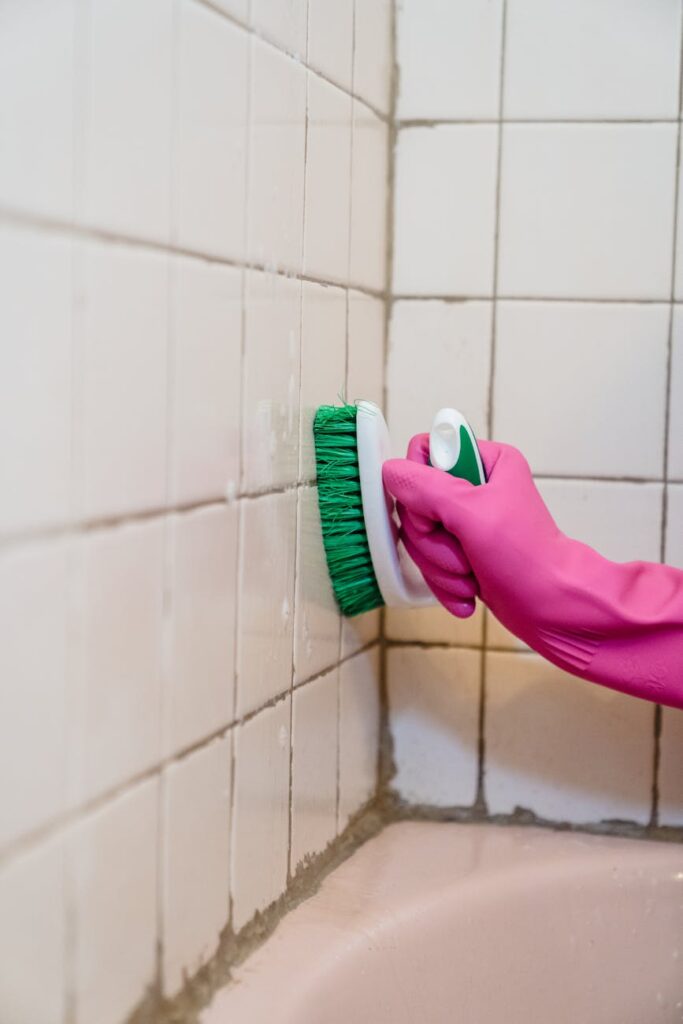
Using a stiff-bristle brush or an old toothbrush, scrub the moldy areas thoroughly. Make sure to get into the grout lines and corners where mold likes to hide.
Step 5: Rinse and Dry
Rinse the area with clean water to remove any cleaning solution and loosened debris. Use a squeegee or towel to dry the tiles and grout completely. This step is crucial, as moisture is the enemy of mold.
Step 6: Deodorize
To further eliminate any lingering odors, place an open box of baking soda in the bathroom. Alternatively, you can use an essential oil diffuser to add a pleasant scent.
Best Cleaning Methods
1. Bleach Solution: For severe mold infestations, a bleach solution (one cup of bleach to a gallon of water) can be effective. However, ensure good ventilation and never mix bleach with ammonia.
2. Hydrogen Peroxide: This is another excellent option. Spray 3% hydrogen peroxide directly on the moldy area, let it sit for 10 minutes, then scrub and rinse.
3. Steam Cleaning: If you have a steam cleaner, use it on tiles and grout. The high temperature can kill mold spores and eliminate odors.
4. Commercial Mold Removers: Products specifically designed for mold removal can be effective. Always follow the manufacturer’s instructions for safe application.
Common Mistakes to Avoid
Prevention Tips
1. Ventilation: Install a powerful exhaust fan and use it during and after baths or showers to reduce humidity.
2. Regular Cleaning: Establish a regular cleaning schedule for your bathroom. Focus on tiles and grout to prevent mold buildup.
3. Seal Grout: Applying a grout sealer can help repel moisture and deter mold growth. Reapply as needed.
4. Wipe Down Surfaces: After each use, wipe down tiles and fixtures to remove excess moisture.
5. Use a Dehumidifier: If your bathroom is consistently humid, consider using a dehumidifier to keep moisture levels in check.
Frequently Asked Questions
1. How often should I clean my bathroom to prevent mold?
Aim for at least once a week. High-humidity areas may require more frequent cleaning.
2. Can I use vinegar on colored grout?
Vinegar can discolor colored grout. Always test a small area first, or opt for a mild cleaner instead.
3. What can I do if the smell lingers after cleaning?
Place an open box of baking soda in the bathroom to absorb odors. Regular ventilation can also help.
4. How can I tell if I have mold behind the tiles?
Look for water stains, discoloration, or peeling paint. If you suspect mold, consider consulting a professional.
5. Is it safe to use bleach in the bathroom?
Yes, but ensure proper ventilation and never mix it with ammonia or other cleaners.
6. Can essential oils help with bathroom odors?
Yes, essential oils can mask odors. However, they don’t kill mold. Use them in conjunction with cleaning methods for best results.
By following these steps, you can effectively combat bathroom tile mold odors and create a clean, pleasant environment. Regular maintenance and vigilance will go a long way in keeping your bathroom fresh and mold-free.