
Bathroom Tile Mold & Damp Guide Part 2
Introduction
Mould and damp in bathroom tiles is a common issue that many homeowners face. Not only does it affect the appearance of your bathroom, but it can also lead to more serious structural problems and unpleasant odors. This guide will provide you with practical solutions to identify, treat, and prevent mould and damp on your bathroom tiles.
What Causes Mould & Damp?
Mould thrives in environments where moisture levels are high. Bathrooms are particularly susceptible due to:
1. High Humidity: Showers and baths increase humidity levels.
2. Poor Ventilation: Lack of airflow allows moisture to linger.
3. Water Leaks: Leaky pipes or fixtures can contribute to dampness.
4. Condensation: Steam from hot water can condense on cold surfaces.
Understanding these causes will help you tackle the problem more effectively.
Why This Problem Happens
Mould and damp develop when moisture accumulates and is not adequately eliminated. Here are some common reasons:
- Inadequate Airflow: Bathrooms without windows or vents trap humidity.
- Old Grout and Caulk: Worn-out materials can harbor moisture.
- Clutter: Items left on the floor can obstruct airflow.
- Improper Cleaning: Not cleaning regularly allows mould spores to settle and grow.
- Protective gloves and mask
- Scrub brush or sponge
- Bucket
- Spray bottle
- Vinegar or commercial mould cleaner
- Baking soda (optional)
- Grout sealer
- Vinegar Solution: Effective for light mould and easy to use.
- Baking Soda Paste: Mix with water for tougher stains; it’s abrasive yet gentle.
- Commercial Cleaners: For severe mould, choose a product specifically designed for bathroom surfaces.
- Bleach Solution: Use with caution; it can discolor surfaces and should never be mixed with ammonia.
By recognizing these factors, you can take proactive measures to keep your bathroom dry.
How to Fix Mould & Damp (Step-by-Step)
Step 1: Gather Your Supplies
Before starting, collect the following materials:
Step 2: Identify Affected Areas
Inspect your bathroom tiles, grout, and caulk for mould growth. Look in corners, behind fixtures, and areas that remain damp.
Step 3: Prepare the Cleaning Solution
For a natural solution, mix equal parts of white vinegar and water in a spray bottle. Alternatively, use a commercial mould remover according to the manufacturer’s instructions.
Step 4: Apply Cleaning Solution
Spray the affected areas generously with your cleaning solution. Allow it to sit for 10-15 minutes to penetrate the mould.
Step 5: Scrub Away Mould
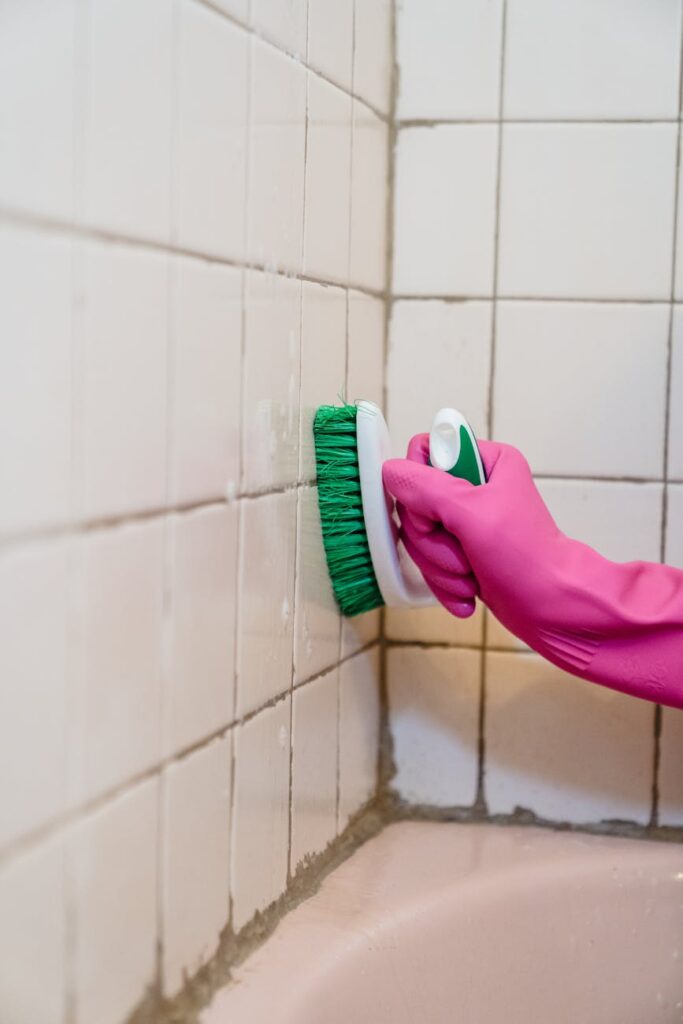
Using a scrub brush or sponge, scrub the tiles and grout gently. Be thorough, focusing on stubborn spots. For persistent mould, sprinkle baking soda on the area before scrubbing for added abrasiveness.
Step 6: Rinse and Dry
Rinse the area with warm water to remove cleaner residue. Dry the area thoroughly with a towel to prevent further moisture accumulation.
Step 7: Seal Grout and Caulk
Once the area is clean and dry, apply a grout sealer to protect against future mould growth. Ensure caulking is intact; reapply as necessary.
Best Cleaning Methods
Common Mistakes to Avoid
1. Ignoring Ventilation: Always ensure your bathroom is well-ventilated during and after showers.
2. Using the Wrong Cleaner: Avoid harsh chemicals that can damage tiles or grout.
3. Not Rinsing Properly: Residue can attract more dirt and mould.
4. Skipping Regular Maintenance: Clean your bathroom regularly to prevent mould from taking hold.
Prevention Tips
1. Improve Ventilation: Use exhaust fans and open windows during and after showers.
2. Keep Surfaces Dry: Wipe down tiles with a towel after use.
3. Regular Cleaning: Clean tiles and grout every week with a mild cleaner.
4. Check for Leaks: Regularly inspect plumbing fixtures for signs of leaks.
5. Use Mould-Resistant Products: Consider mould-resistant paint and caulk when renovating.
Frequently Asked Questions
1. How often should I clean my bathroom to prevent mould?
Cleaning your bathroom once a week is ideal for keeping mould at bay.
2. Can I use bleach to remove mould?
Yes, but use it sparingly and ensure proper ventilation. Bleach can discolor some surfaces.
3. What should I do if the mould keeps coming back?
Inspect for leaks or condensation issues and consider consulting a professional if the problem persists.
4. Is mould on tiles harmful?
While bathroom mould is primarily a nuisance, it can potentially cause health issues for sensitive individuals.
5. How can I tell if I have a leak?
Look for water stains, peeling paint, or damp spots on walls and ceilings.
6. Can I prevent mould growth with essential oils?
Some essential oils, like tea tree oil, have antifungal properties and can be added to cleaning solutions for added protection.
By following these guidelines, you can effectively manage and prevent mould and damp in your bathroom, ensuring a clean and healthy environment for you and your family.