
Bathroom Tile Mold & Damp Guide Part 1
Introduction
Mould and damp in your bathroom can be a frustrating and unsightly problem. Not only does it affect the appearance of your tiles, but it can also lead to more severe issues if not addressed promptly. In this guide, we’ll explore the causes of mould and damp, provide practical solutions for cleaning it up, and share tips on how to prevent it in the future.
What Causes Mould & Damp?
Mould thrives in moist environments, making bathrooms a prime location for its growth. Here are some common causes:
1. High Humidity: Bathrooms often have high humidity levels due to steaming showers and baths.
2. Poor Ventilation: Lack of airflow can trap moisture, creating an ideal environment for mould.
3. Water Leaks: Leaks from pipes, faucets, or showerheads can contribute to dampness.
4. Condensation: Cold surfaces, like tiles, can cause moisture in the air to condense and collect.
5. Dirty Grout: Grout can absorb moisture and become a breeding ground for mould if not cleaned regularly.
Why This Problem Happens
Understanding why mould and damp occur in your bathroom is key to tackling the issue effectively. The combination of warmth and moisture creates a perfect storm for mould spores to settle and grow. The lack of proper ventilation means that any moisture generated from showers, baths, or even daily use isn’t adequately expelled, leading to accumulation.
Additionally, if there are areas of water damage from leaks or cracks in the tiles, these can worsen the damp situation. This not only promotes mould growth but can also damage the structure of your bathroom over time.
How to Fix Mould & Damp (Step-by-Step)
Step 1: Gather Your Supplies
Before you start cleaning, gather the following supplies:
- Rubber gloves
- Protective eyewear
- A mask (to avoid inhaling mould spores)
- Scrub brush or sponge
- Bucket
- Spray bottle
- Cleaning solution (options include vinegar, baking soda, or commercial mould removers)
- Vinegar Method: Fill a spray bottle with white vinegar and spray directly onto mouldy areas. Let it sit for at least an hour.
- Baking Soda Paste: Mix baking soda with water to create a paste. Apply it to the affected areas and let it sit for 10-15 minutes.
- Natural Antimicrobial: Vinegar is effective at killing mould and is safe to use.
- How to Use: Spray undiluted vinegar directly on mould, let it sit, then scrub and rinse.
- Gentle Abrasive: Baking soda helps scrub away mould without scratching tiles.
- How to Use: Mix with water to form a paste, apply, let it sit, scrub, and rinse.
Step 2: Prepare the Area
1. Turn off water sources: Ensure all faucets and showers are off.
2. Ventilate the bathroom: Open windows and doors to allow fresh air in.
Step 3: Apply Cleaning Solution
Step 4: Scrub the Mould
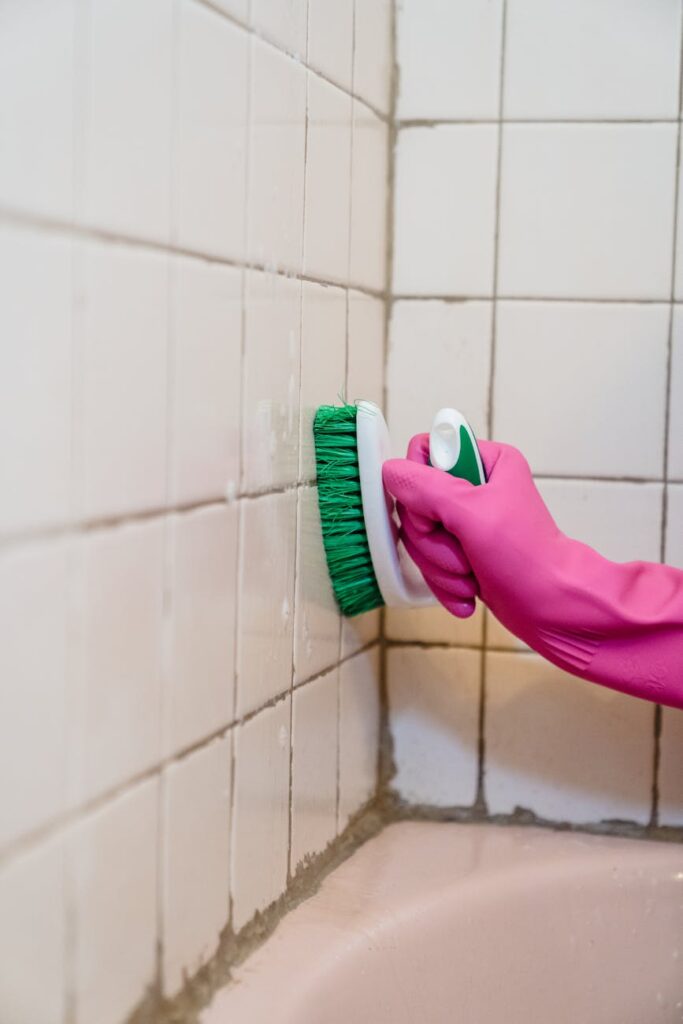
Using a scrub brush or sponge, scrub the affected tiles and grout vigorously. Pay extra attention to corners and crevices where mould tends to hide.
Step 5: Rinse and Dry
1. Rinse the tiles with warm water to remove any cleaning solution and mould residues.
2. Dry the area thoroughly with a clean towel or cloth to prevent moisture buildup.
Step 6: Inspect for Leaks
After cleaning, check for any leaks around faucets, showerheads, and pipes. Address any issues immediately to prevent future dampness.
Best Cleaning Methods
While there are various cleaning methods, these two are particularly effective for tackling mould on bathroom tiles:
1. Vinegar
2. Baking Soda
For more stubborn mould, consider using a commercial mould remover. Always follow the manufacturer’s instructions.
Common Mistakes to Avoid
1. Ignoring Ventilation: Not addressing ventilation can lead to recurrence. Always use exhaust fans or open windows while showering.
2. Using Bleach: While bleach may seem like a quick solution, it can worsen mould problems by providing moisture and can damage grout over time.
3. Not Cleaning Regularly: Mould can grow quickly, so regular cleaning is essential to keep it at bay.
4. Neglecting Grout: Grout needs just as much attention as tiles. Ensure you clean and seal it regularly.
Prevention Tips
1. Increase Ventilation: Install or use exhaust fans during and after showers to reduce humidity.
2. Wipe Down Surfaces: After use, wipe down tiles and shower walls with a squeegee or towel to eliminate excess moisture.
3. Seal Grout: Apply a grout sealer every 6-12 months to protect it from absorbing moisture.
4. Use a Dehumidifier: In particularly damp areas, consider using a dehumidifier to reduce overall humidity levels.
Frequently Asked Questions
1. How often should I clean my bathroom to prevent mould?
Aim to clean your bathroom once a week, paying special attention to high-moisture areas.
2. Can mould cause health issues?
While this guide doesn’t provide medical advice, it’s essential to address mould promptly, as prolonged exposure can cause respiratory issues.
3. What is the best way to remove mould from grout?
Using a mixture of baking soda and vinegar is highly effective. Scrub the grout with a brush after applying the solution.
4. Is it safe to use bleach on mould?
Bleach can be harmful and may not effectively eliminate mould from porous surfaces like grout. Opt for vinegar or baking soda instead.
5. How do I know if I have a leak causing dampness?
Look for water stains, peeling paint, or damp spots on walls and ceilings. If you suspect a leak, check plumbing fixtures for drips.
6. What should I do if the mould keeps coming back?
If mould reappears frequently, check for ongoing moisture issues, improve ventilation, and consider consulting a professional for a more thorough inspection.
Conclusion
Bathroom tile mould and dampness can be effectively tackled with the right cleaning methods and preventive measures. By understanding the causes and implementing regular cleaning and maintenance, you can keep your bathroom looking fresh and mould-free. Stay tuned for Part 2, where we’ll delve deeper into specific mould removal products and advanced techniques.