
Bathroom Tile Mold Cleaning Guide Part 1
Introduction
Bathroom tile mold can be an unsightly and persistent problem for many homeowners. Not only does it detract from the beauty of your bathroom, but it can also pose hygiene concerns. In this guide, we’ll explore the causes of mold, effective cleaning methods, and preventative measures to keep your bathroom looking fresh and clean.
What Causes Mold in the Bathroom?
Mold thrives in damp, warm environments, making bathrooms the perfect breeding ground. Here are the main contributors to bathroom tile mold:
1. High Humidity: Bathrooms often have high moisture levels, especially after showers or baths.
2. Poor Ventilation: Without adequate airflow, moisture cannot escape, leading to mold growth.
3. Water Leaks: Leaky faucets or pipes provide the moisture that mold loves.
4. Dirty Surfaces: Soap scum, shampoo residue, and dirt can create an environment conducive to mold.
5. Grout Issues: Cracked or damaged grout can trap moisture, providing a perfect spot for mold to grow.
Why This Problem Happens
Understanding why mold develops is crucial for effective cleaning. When humidity levels rise, especially in poorly ventilated spaces, condensation forms on surfaces. This moisture, combined with organic materials like soap and hair, creates an ideal environment for mold spores to settle and proliferate. The porous nature of grout and tile can further exacerbate the issue, allowing mold to take root deep within the surfaces.
How to Fix Mold (Step-by-Step)
Step 1: Gather Your Supplies
Before you start, make sure you have the following:
- Rubber gloves
- Face mask
- Bucket
- Sponge or scrub brush
- Spray bottle
- Cleaning agents (bleach, vinegar, or commercial mold remover)
- Old toothbrush
Step 2: Prepare the Area
1. Ventilation: Open windows or turn on an exhaust fan to ensure good airflow.
2. Protect Surfaces: Lay down old towels or plastic sheets to protect floors and surfaces from drips.
Step 3: Apply Cleaning Solution
1. For Mild Mold: Mix equal parts of white vinegar and water in a spray bottle. Spray directly on the affected areas and let it sit for at least 10 minutes.
2. For Stubborn Mold: Use a bleach solution (one cup of bleach diluted in a gallon of water). Apply using a sponge or scrub brush.
Step 4: Scrub the Area
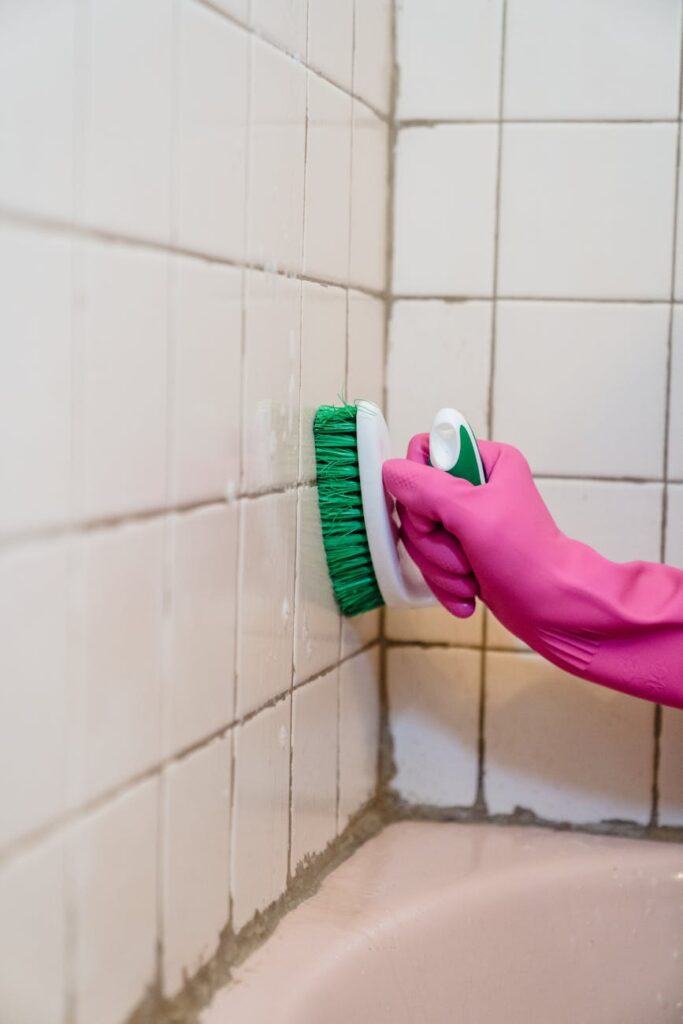
Using a sponge or scrub brush, scrub the tiles and grout in a circular motion. For hard-to-reach areas, use an old toothbrush to get into the grooves.
Step 5: Rinse and Dry
Rinse the tiles thoroughly with warm water to remove any cleaning solution. Wipe down with a dry towel to eliminate any lingering moisture.
Step 6: Dispose of Waste Safely
Dispose of any sponges, towels, or protective gear used during the cleaning process safely to prevent mold spores from spreading.
Best Cleaning Methods
1. Vinegar: A natural solution that kills most types of mold and mildew.
2. Bleach: Effective for tough mold stains but should be used with caution due to its harshness.
3. Baking Soda: Acts as a gentle abrasive and deodorizer; mix with water to create a paste.
4. Commercial Mold Removers: Often specially formulated for bathroom surfaces, these can save time and effort.
Common Mistakes to Avoid
1. Ignoring Ventilation: Failing to ventilate the bathroom during and after cleaning can lead to mold returning quickly.
2. Using Too Much Water: Excess water can seep into grout and tiles, promoting mold growth instead of eliminating it.
3. Neglecting Grout: Focusing only on tile surfaces and ignoring the grout can result in recurring mold issues.
4. Using Abrasive Tools: Scrubbing too hard can scratch tiles and damage grout, making surfaces more susceptible to mold.
Prevention Tips
1. Improve Ventilation: Install an exhaust fan and keep it running during and after showers.
2. Regular Cleaning: Clean your bathroom tiles and grout weekly to prevent mildew from establishing.
3. Seal Grout: Apply a grout sealer every year to protect against moisture.
4. Use a Squeegee: After each shower, use a squeegee to remove excess water from tiles.
5. Keep Surfaces Dry: Wipe down wet surfaces after use to minimize moisture retention.
Frequently Asked Questions
1. How often should I clean my bathroom tiles to prevent mold?
Cleaning your bathroom tiles weekly is ideal to prevent mold and soap scum buildup.
2. Can I use bleach on colored grout?
It’s best to avoid bleach on colored grout, as it may discolor it. Opt for vinegar or a commercial cleaner instead.
3. What’s the best way to remove mold from grout?
A mixture of baking soda and water can create a paste that effectively removes mold from grout.
4. Is vinegar effective against all types of mold?
While vinegar is effective against many mold types, it may not kill all spores, especially some black molds. In such cases, stronger solutions like bleach may be necessary.
5. Can I prevent mold without using harsh chemicals?
Yes, regular cleaning with vinegar and baking soda can effectively prevent mold without harsh chemicals.
6. What should I do if the mold keeps coming back?
If mold continues to return, check for leaks, improve ventilation, and consider applying a mold-resistant sealant on tiles and grout.
By following this guide, you can effectively tackle bathroom tile mold, ensuring a clean and healthy environment in your home. Stay tuned for Part 2, where we’ll dive deeper into advanced cleaning techniques and solutions.