
Bathroom Tile Mold Bathroom Guide Part 2
Introduction
Bathroom tile mold is a common issue that can turn your pristine bathroom into a damp, unsightly space. This guide aims to equip you with actionable steps to tackle mold effectively, ensuring your bathroom remains clean and inviting. We’ll cover what causes mold, how to fix existing problems, the best cleaning methods, and tips for prevention.
What Causes Bathroom Mold?
Mold thrives in damp, warm environments, making bathrooms a perfect breeding ground. Here are the primary factors contributing to mold growth on bathroom tiles:
1. High Humidity: Showers and baths increase moisture levels in the air.
2. Poor Ventilation: Lack of airflow traps humidity, creating an ideal environment for mold.
3. Water Leaks: Leaky faucets or pipes can keep tiles consistently damp.
4. Grout Deterioration: Cracked or missing grout allows moisture to seep into the tile substrate.
Why This Problem Happens
Understanding why mold forms in the bathroom is crucial for effective remediation and prevention. Here are some underlying reasons:
- Condensation: When warm air meets cooler surfaces, condensation forms, providing moisture for mold.
- Infrequent Cleaning: Neglecting regular cleaning allows mold spores to settle and flourish.
- Organic Material: Soap scum, hair, and skin cells provide nutrients for mold growth.
- Temperature Fluctuations: Extreme changes in temperature can promote condensation.
- Rubber gloves
- Face mask (optional)
- Scrub brush or sponge
- Bucket
- Spray bottle
- Cleaning solution (vinegar, baking soda, or commercial mold cleaner)
- Old toothbrush (for grout lines)
- Improve Ventilation: Install an exhaust fan or keep a window open during and after showers.
- Use Squeegees: After showering, use a squeegee on tiles to remove excess water.
- Regular Cleaning: Maintain a cleaning schedule that includes scrubbing tiles and grout.
- Seal Grout Lines: Use a grout sealer to protect against moisture infiltration.
- Reduce Humidity: Use a dehumidifier if your bathroom lacks proper airflow or ventilation.
How to Fix Bathroom Mold (Step-by-Step)
Removing mold from bathroom tiles requires a systematic approach. Follow these steps for effective cleaning:
Step 1: Gather Your Supplies
Step 2: Prepare the Area
1. Ventilate: Open windows or turn on the exhaust fan to minimize inhaling mold spores.
2. Clear the Space: Remove toiletries and items from the area you’ll be cleaning.
Step 3: Apply Cleaning Solution
1. Vinegar Method: Fill a spray bottle with white vinegar, spray the affected areas, and let it sit for 30 minutes.
2. Baking Soda Paste: Mix baking soda with water to form a paste; apply it to the moldy areas and let it sit for 10-15 minutes.
Step 4: Scrub the Mold
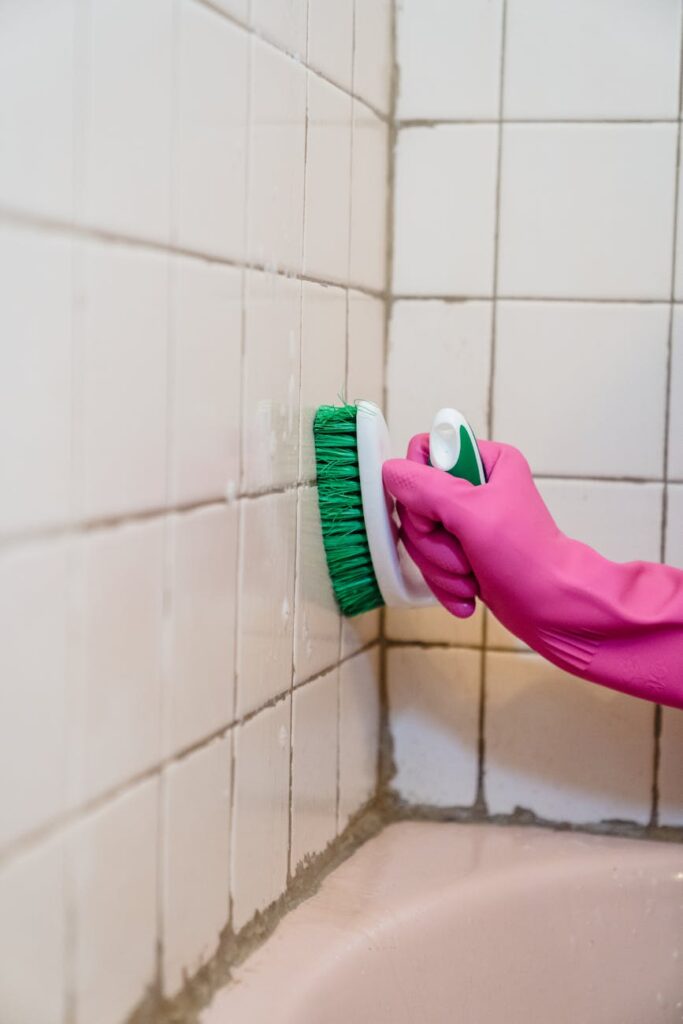
Using a scrub brush or sponge, scrub the tiles and grout vigorously. For stubborn mold, use an old toothbrush to reach into grout lines.
Step 5: Rinse and Dry
Rinse the area thoroughly with water. Use a dry towel or cloth to wipe down surfaces and reduce moisture.
Step 6: Dispose of Cleaning Materials
Safely dispose of used sponges or cloths to prevent spreading mold spores.
Best Cleaning Methods
Several cleaning methods can effectively eradicate mold. Choose one based on your preference:
1. Vinegar: A natural solution that kills most mold species. It’s safe and non-toxic.
2. Baking Soda: Acts as a mild abrasive and deodorizer, making it perfect for scrubbing away mold.
3. Hydrogen Peroxide: Use a solution of 3% hydrogen peroxide in a spray bottle for tougher mold stains.
4. Commercial Mold Cleaners: If natural methods fail, opt for a commercial cleaner specifically designed to tackle mold.
Common Mistakes to Avoid
When dealing with bathroom mold, avoid these common pitfalls:
1. Ignoring Small Spots: Small patches can quickly grow into larger infestations if not addressed.
2. Using the Wrong Tools: Avoid abrasive scrubbers that can damage tiles and grout.
3. Not Ventilating the Area: Failing to ventilate can lead to more mold growth during cleaning.
4. Using Bleach Incorrectly: Bleach can kill surface mold but doesn’t penetrate porous materials like grout, allowing mold to return.
5. Neglecting Grout: Mold often hides in grout lines; be sure to clean these areas thoroughly.
Prevention Tips
Preventing mold is far easier than removing it. Here are some effective tips:
Frequently Asked Questions
1. How often should I clean my bathroom to prevent mold?
Aim to clean your bathroom at least once a week, paying special attention to tiles and grout.
2. Can I use bleach to remove mold from tiles?
While bleach can kill surface mold, it doesn’t penetrate grout effectively. Consider using vinegar or hydrogen peroxide for better results.
3. Are there any natural solutions for mold removal?
Yes, vinegar and baking soda are excellent natural solutions for removing mold safely.
4. How do I know if my mold problem is serious?
If mold keeps returning after cleaning, or if you notice a musty smell, it may indicate a larger issue, possibly requiring professional intervention.
5. Can I prevent mold by using anti-fungal sprays?
Yes, anti-fungal sprays can help, but they should not replace regular cleaning and maintenance.
6. What if mold keeps coming back?
Persistent mold issues may indicate underlying problems, such as water leaks or inadequate ventilation. Inspect your bathroom for these issues and address them promptly.
By following the steps outlined in this guide, you can effectively manage and prevent bathroom tile mold, ensuring a clean and healthy environment in your home. Regular maintenance and vigilance are key to keeping mold at bay.