
Bathroom Mildew Removal Bathroom Guide Part 2
Introduction
Bathroom mildew is not just an eyesore; it can also be a persistent problem that affects the cleanliness and hygiene of your home. This guide will provide you with practical steps to identify, remove, and prevent mildew in your bathroom. Whether you’re dealing with a small patch or a larger infestation, this article is designed to help you tackle mildew effectively.
What Causes Bathroom Mildew?
Mildew thrives in damp, warm environments, making bathrooms the perfect breeding ground. The primary causes include:
- High Humidity: Showers, baths, and even sinks produce moisture that can linger.
- Poor Ventilation: Lack of airflow traps humidity in the bathroom.
- Neglected Cleaning: Dirt and soap scum can provide nutrients for mildew growth.
- Leaky Pipes: Water leaks from pipes can create damp spots ideal for mildew.
- Condensation: Hot showers can create condensation on walls and ceilings.
- Warmth: The warmth from heating appliances can promote mildew growth.
- Organic Material: Mildew feeds on organic matter like soap residue and hair.
- Rubber gloves
- Mask
- Scrub brush
- Spray bottle
- Cleaning solution (vinegar, baking soda, or commercial mildew remover)
- Microfiber cloths
- Bucket
- Old toothbrush (for tight spots)
- Why Use It: Vinegar is a natural antifungal and antibacterial agent.
- How to Use It: Spray it directly on mildew and let it sit before scrubbing.
- Why Use It: It’s a gentle abrasive that helps scrub away mildew without scratching surfaces.
- How to Use It: Mix with water to form a paste for application.
- Why Use It: It’s effective against mold and mildew due to its oxidizing properties.
- How to Use It: Spray 3% hydrogen peroxide on the affected area and let it sit before scrubbing.
- Why Use It: They are formulated to tackle tough mildew stains.
- How to Use It: Follow the manufacturer’s instructions for the best results.
- Ventilate: Always use an exhaust fan or open a window during and after showers.
- Wipe Down Surfaces: After each use, wipe down shower walls and fixtures to reduce moisture.
- Seal Grout: Apply a mildew-resistant sealant to the grout to protect it from moisture.
- Regular Cleaning: Clean your bathroom at least once a week to prevent buildup.
- Dehumidify: Consider using a dehumidifier if your bathroom is particularly prone to moisture.
Understanding these causes is the first step to effective removal and prevention.
Why This Problem Happens
Mildew forms when spores settle on a surface and find the right conditions to grow. Bathrooms often have:
By recognizing these factors, you can better manage your bathroom environment and reduce mildew risk.
How to Fix Bathroom Mildew (Step-by-Step)
Removing mildew from your bathroom can be straightforward if you follow these steps:
Step 1: Gather Your Supplies
Before you start, gather the necessary cleaning supplies:
Step 2: Prepare the Area
1. Ventilate the Space: Open windows and doors to allow fresh air in.
2. Remove Items: Take out toiletries, towels, and any items that might get in the way.
Step 3: Apply Cleaning Solution
1. Vinegar Method: Fill a spray bottle with white vinegar. Spray the affected areas generously.
2. Baking Soda Method: Create a paste with baking soda and water. Apply it to the mildew.
3. Commercial Cleaner: If using a store-bought cleaner, follow the instructions on the label.
Let the cleaner sit for 10-15 minutes to penetrate the mildew.
Step 4: Scrub the Areas
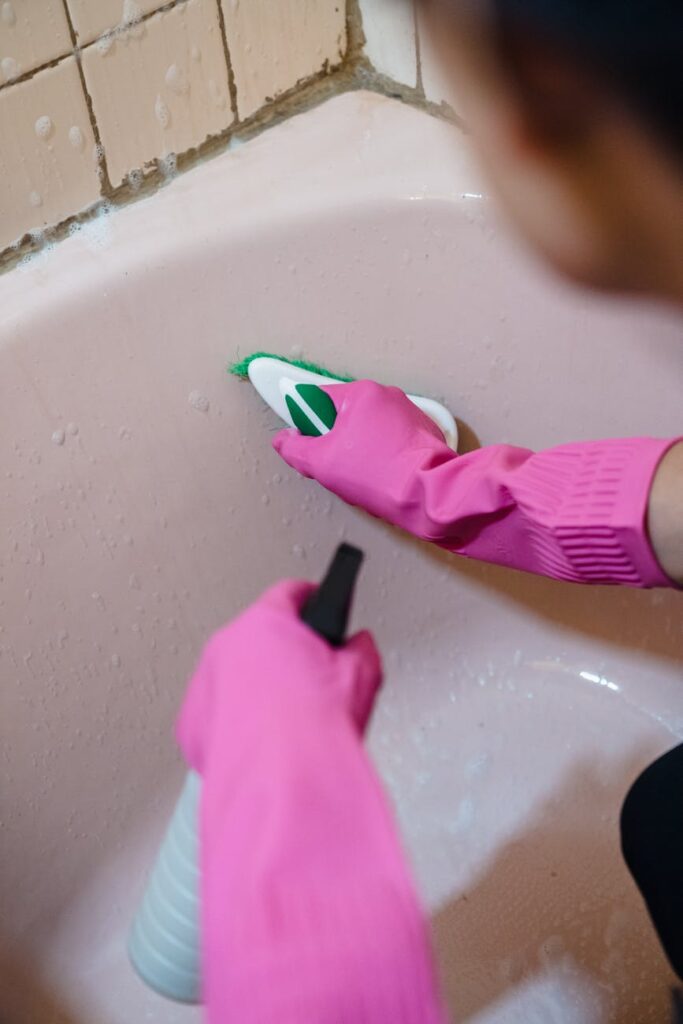
Using a scrub brush or old toothbrush, scrub the mildew stains. For tougher spots, a little extra elbow grease may be needed.
Step 5: Rinse and Dry
1. Rinse the surfaces with warm water.
2. Use a microfiber cloth to dry the area completely. This step is crucial to prevent mildew from returning.
Step 6: Dispose of Cleaning Materials
Dispose of any cleaning materials properly. Wash reusable cloths in hot water to remove any mildew spores.
Best Cleaning Methods
When it comes to cleaning mildew, several methods are effective:
Vinegar
Baking Soda
Hydrogen Peroxide
Commercial Cleaners
Common Mistakes to Avoid
When dealing with mildew removal, avoid these common pitfalls:
1. Not Wearing Protective Gear: Always wear gloves and a mask to protect yourself from spores.
2. Using Bleach: While bleach can kill mildew, it often doesn’t remove it completely and can actually promote its growth in the long run.
3. Skipping Drying: Failing to dry the area thoroughly encourages mildew to return.
4. Ignoring Hidden Areas: Don’t forget about grout lines, corners, and behind fixtures where mildew can hide.
Prevention Tips
Preventing mildew is just as important as removal. Here are some practical tips:
Frequently Asked Questions
1. How often should I clean my bathroom to prevent mildew?
Aim to clean your bathroom at least once a week. This includes wiping down surfaces and scrubbing the shower or tub.
2. Can I use essential oils to combat mildew?
Yes, essential oils like tea tree oil and lavender have antifungal properties. Mix a few drops with water in a spray bottle and apply it to affected areas.
3. Is it safe to mix cleaning solutions?
Avoid mixing different cleaning solutions, especially bleach and ammonia, as this can create toxic fumes.
4. What’s the best way to clean grout?
Use a mixture of baking soda and water to form a paste. Scrub the grout lines with an old toothbrush, then rinse with water.
5. How can I tell if the mildew is gone?
Check for any remaining stains or musty odors. A thorough cleaning should eliminate visible mildew and the smell.
6. Do I need to call professionals for severe mildew problems?
If mildew persists despite your efforts, or if it’s in hard-to-reach areas, it may be time to consult a professional cleaning service.
By following these practical steps and tips, you can effectively remove mildew from your bathroom and prevent it from returning. A clean and mildew-free bathroom is not just about aesthetics; it contributes to a healthier living environment. Happy cleaning!